Author: Hammad Ishaq
Last verified on: October 5, 2025
Overview
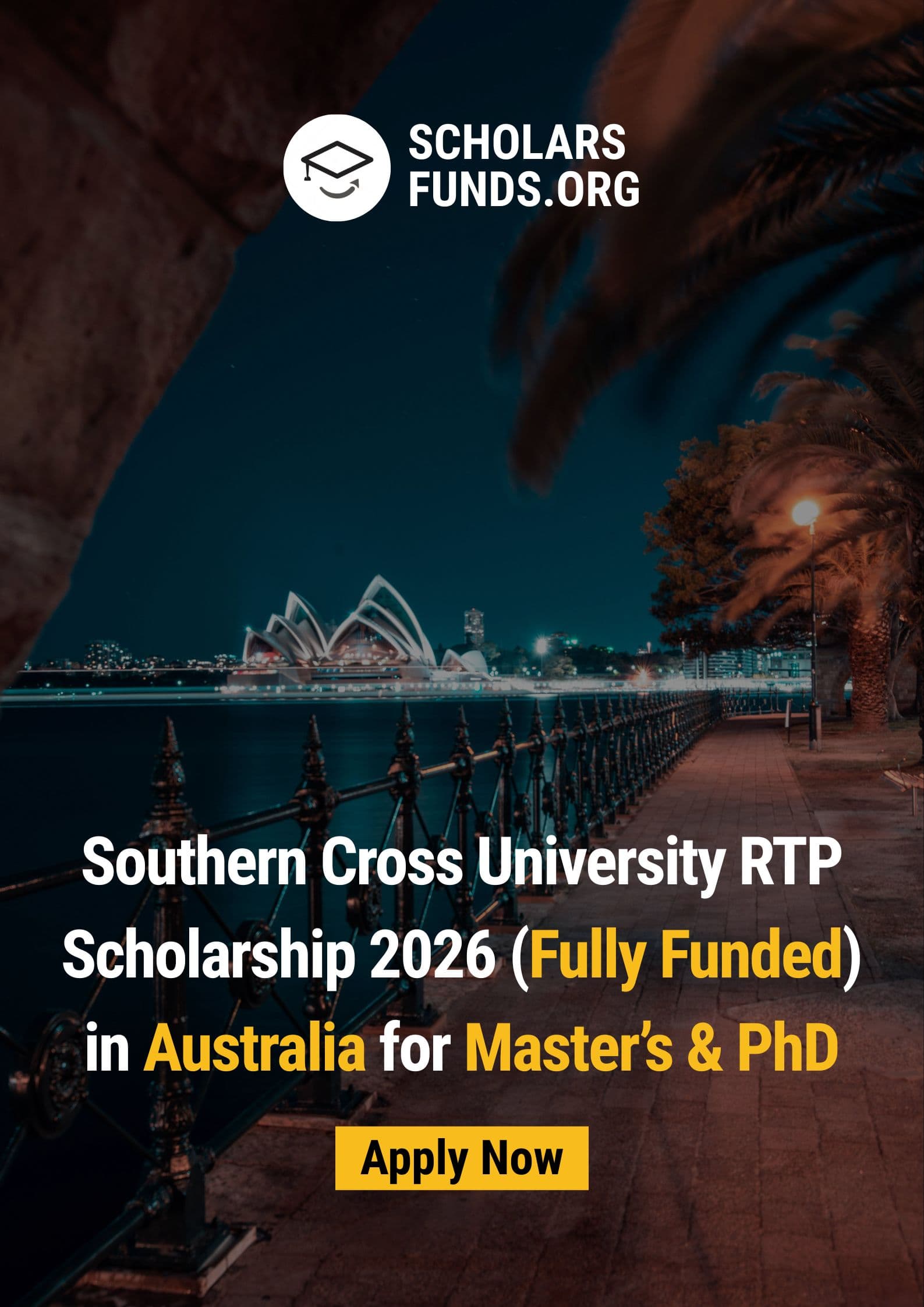
The RTP Scholarship at Southern Cross University (SCU) is part of the Australian Government’s Research Training Program (RTP), administered jointly by the government and SCU’s Graduate School. (scu.edu.au) The RTP Scholarship aims to support high-quality research in Australia by funding HDR candidates (i.e. those enrolled in a Master by Research or PhD) in Australian universities. (policies.scu.edu.au) At SCU, this scholarship is one of the primary routes for international students to pursue research degrees without bearing full cost burden.
SCU offers both components of the RTP:
Stipend (living allowance)
Fee offset (tuition waiver)
These may be awarded together (for those selected for full stipend) or partially (fee offset only) depending on allocation. (policies.scu.edu.au)
Benefits / Funding
What is covered
Stipend / living allowance: For candidates awarded the RTP stipend, SCU provides a living allowance at the Commonwealth base rate (indexed annually). (scu.edu.au)
Fee offset (tuition waiver): Recipients of RTP stipend also receive a fee offset, meaning that their tuition fees for the HDR candidature will be fully waived. (policies.scu.edu.au)
Allowances: The RTP policy may also include additional allowances such as thesis preparation allowances, relocation allowances, and travel expenses under certain conditions. (policies.scu.edu.au)
Duration
PhD (Doctoral): Up to 3 years full-time equivalent tenure, with possible extension of up to 6 months under compelling reasons. (policies.scu.edu.au)
Master by Research: Up to 2 years full-time equivalent (no extension beyond that) (policies.scu.edu.au)
The awarded period is reduced by any prior HDR research undertaken before commencement. (policies.scu.edu.au)
What is not covered
Living expenses beyond the stipend (i.e. extra costs of dependents, personal travel)
Some overheads or project-specific costs unless explicitly provided
For candidates receiving only the fee offset (without stipend), no living allowance will be given
Extensions beyond maximum allowed, unless exceptional and approved
If transferring from another university with existing RTP benefits, SCU will not "take over" the stipend; one must apply anew for stipend support. (policies.scu.edu.au)
Eligibility
To be eligible for SCU’s RTP Scholarship in 2026, applicants must satisfy a series of criteria. These are based on SCU’s RTP policy and the RTP “Guidelines (Commonwealth)” which the university follows. (policies.scu.edu.au)
Citizenship / residency
The scholarship is open to both domestic and international candidates. (scu.edu.au)
For the RTP International Fee Offset, the applicant must not be a domestic student (i.e. must not be Australian / New Zealand citizen or permanent resident) (policies.scu.edu.au)
International candidates applying for stipend + fee offset are eligible if they meet other criteria and SCU has funding available. (policies.scu.edu.au)
Academic level & research
Must be applying to enroll or already enrolled in a Higher Degree Research (HDR) program (Master by Research or PhD) at SCU for which RTP support is allowed. (policies.scu.edu.au)
Must meet the admission requirements for the HDR award they apply for (university-level requirements). (scu.edu.au)
A suitable supervisor(s) at SCU must be willing and eligible to supervise the candidate’s proposed research. (scu.edu.au)
Time limits / prior study
Prior HDR study time will reduce the available tenure. (policies.scu.edu.au)
A candidate is not eligible for stipend support if they already hold a wholly or partially equivalent government-funded award offsetting HDR tuition fees. (policies.scu.edu.au)
Master by Research scholars are not eligible for extension beyond the 2-year max. (policies.scu.edu.au)
Ineligibilities / caveats
Students already receiving an equivalent government tuition-offset award are ineligible for the RTP stipend or fee offset. (policies.scu.edu.au)
For international candidates, the RTP stipend component is usually offered only to full-time, on-shore students. (policies.scu.edu.au)
Submission must be complete; incomplete applications will not be considered. (scu.edu.au)
Timeline & Deadlines
The following schedule is based on the latest publicly available information for SCU’s RTP Scholarship rounds. Applicants should check the official site for updates.
Application deadline: 31 October 2025 (for 2026 intake) (scu.edu.au)
Announcement of results: Not explicitly specified in public documents. As of last verification, the official RTP “Information for Applicants” document does not state a fixed date for result release. (scu.edu.au)
Commencement: The HDR program typically begins in the academic year following award offers (in 2026). (scu.edu.au)
Internal/Institutional Preselection: SCU does not appear to require internal departmental preselection beyond providing supervisor support, though the Graduate School will assess applications centrally. (scu.edu.au)
Milestone / Progress reviews: Recipients must maintain satisfactory progress and meet HDR milestones (e.g. confirmation, mid-term reviews) to continue receiving funding. (policies.scu.edu.au)
How to Apply (Step-by-Step)
Identify a supervisor
Before applying, confirm that one or more SCU academic staff are willing and eligible to supervise your research. This is a critical requirement. (scu.edu.au)Apply for HDR admission at SCU
Submit an application to enroll in your chosen HDR program (Master by Research or PhD) via SCU’s postgraduate admissions process.Obtain the RTP application form
Download the RTP Application Form 2026 (Stipend & Fee Offset) from SCU’s Graduate School website. (scu.edu.au)Fill out the form & prepare documents
Complete all sections of the form, including research proposal, supervisor endorsements, and referee details.Submit your application
Submit the completed form and all supporting documents electronically to[email protected]as per instructions. (scu.edu.au)Confirmation & assessment
After submission, you should receive confirmation. The Graduate School / RTP Committee will assess your application based on criteria and scoring guidelines. (scu.edu.au)Offer letter & acceptance
If selected, SCU issues an offer letter specifying stipend, fee offset, and conditions. Accept by the deadline to confirm your award and enrolment.
Required Documents Checklist
Below is a typical checklist you must ensure before submission (based on SCU’s RTP guidelines):
Completed RTP Application Form (2026) (scu.edu.au)
HDR admission application evidence (offer or pending)
Research proposal (clear objectives, methodology, timeframe)
Supervisor(s) nomination / statement of support
Academic transcripts (undergraduate, honours or master level)
Degree certificates or provisional results
English language test scores (if required)
Curriculum vitae (CV) with publications, research experience
Referee reports (often two academic referees)
Any prior publications, awards, technical outputs
Statements covering potential need for extension or allowance requests (if applicable)
Evidence of eligibility (e.g. citizenship, visa status)
If any specific document is not explicitly required in the public guideline, state that “As of last verification, the official RTP documents do not list as required.”
Selection Criteria & What Reviewers Look For
SCU uses a scoring guideline to rank RTP applications. (scu.edu.au) The key criteria include:
Academic merit / prior performance
Higher academic grades (especially first class honours or equivalent) are heavily weighted.Research potential / experience
Evidence of prior research, publications, relevant technical skills, or independent workQuality of the proposed research
Clarity, originality, methodology, feasibility, alignment with SCU’s research strengthsSupervisory team strength
The qualifications, track record and fit of the proposed supervisorsReferee assessment
Credible references that speak to research ability, character, and potentialCommitment and motivation
Demonstrated in the proposal and statementsPool A vs Pool B
Applicants may choose to be considered under Pool A (recent graduates of first-class honours or research masters in last 2 years) which gives them priority. If not selected in Pool A, they move to Pool B (open to other candidates). (scu.edu.au)
Notably, funding is limited, so even strong applicants might not receive stipend support; those may receive fee offset only scholarships.
Practical Tips to Strengthen Your Application
Secure a strong supervisor before applying; their endorsement matters heavily.
Emphasize originality and impact of your research proposal. Link to SCU’s research themes.
Showcase prior research, internships, publications—even minor ones matter.
Tailor your referees: choose those familiar with your work and can write concretely.
If eligible, opt for Pool A (if you are a recent first-class honours or research master graduate) to gain priority.
Provide a well-structured, error-free proposal and application. Use clarity and precision.
If requesting relocation or travel allowances, justify well with budget and necessity.
Ensure referees submit their letters on time and recommend positively.
Maintain excellent transcripts, reproduce clear grading scales, and provide translations if needed.
Be mindful of deadlines and submit well before closing.
Official Links & Apply Now
SCU Graduate School – RTP Scholarships (official) – for general RTP and related HDR scholarship information (scu.edu.au)
Southern Cross RTP Application Form (2026) – download the form pdf (scu.edu.au)
SCU RTP / Fee Offset Policy (official) – SCU policy document on RTP scholarships (policies.scu.edu.au)
SCU Scholarship Finder – RTP Scholarships – lists RTP in the scholarship search portal (scu.edu.au)
Apply now via: Submit the RTP Application Form (2026) by emailing [email protected] (as per SCU’s published instructions) (scu.edu.au)
FAQ (3–5 Questions & Answers)
Q1: Can I combine RTP with another scholarship or external funding?
A: You may hold other scholarships or grants provided they do not duplicate the same benefits (e.g. covering HDR tuition) or conflict with RTP requirements. However, you cannot hold an equivalent government-funded tuition waiver at the same time. (policies.scu.edu.au)
Q2: What is Pool A vs Pool B, and which should I choose?
A: Pool A is reserved for recent graduates of first-class honours or research masters (within the past two years). If you qualify, applying under Pool A gives priority ranking. If unsuccessful, you may be considered under Pool B (open to all eligible applicants). (scu.edu.au)
Q3: If I’m international and offshore, can I get the stipend?
A: Typically, the stipend component is awarded to full-time, on-shore candidates. International candidates may receive the fee offset only if stipend funding is unavailable or ineligible under policy. (policies.scu.edu.au)
Q4: What happens if my application is incomplete?
A: Incomplete applications will not be considered. SCU’s policy explicitly requires all documentation to be complete for consideration. (scu.edu.au)
Q5: Can I request an extension to a PhD beyond 3 years?
A: Yes, one extension up to 6 months may be granted for delays outside your control, with sufficient justification. (policies.scu.edu.au)
If you are considering applying, start preparing now: secure supervisors, draft your proposal, and gather documents ahead of time. Apply before 31 October 2025 by emailing your RTP Application Form to [email protected] (apply through SCU’s official RTP channel).
Disclaimer: Always double-check the latest policy and deadlines on SCU’s official site or the SCU Graduate School page before submitting, as details may change after this verification date.