Overview
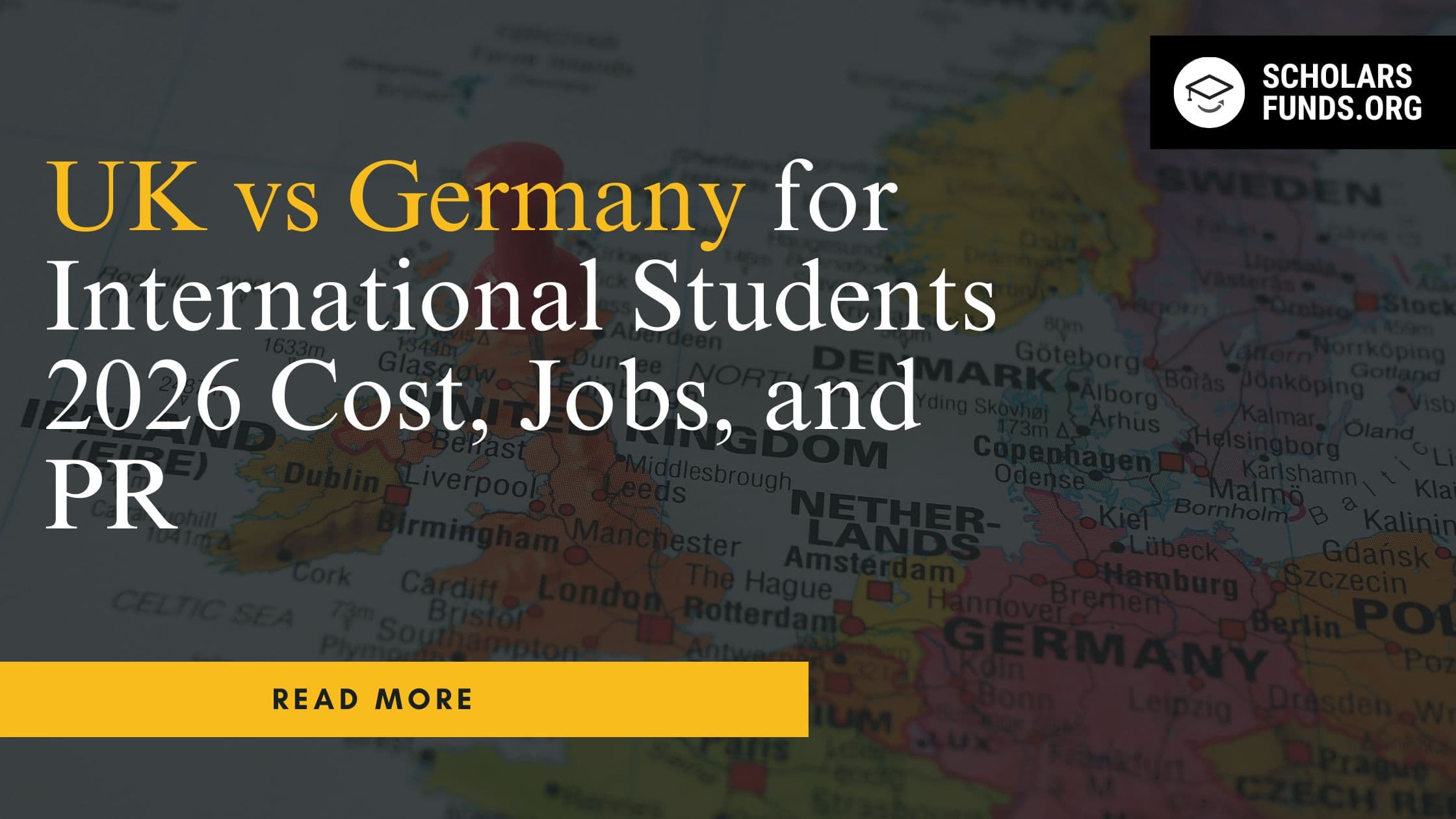
This is the most common comparison question I receive from Pakistani and South Asian students planning to study abroad. I have researched it carefully, and my honest assessment is: for most Pakistani students in most fields, Germany offers better value in 2026. But the UK is genuinely irreplaceable for specific fields and career goals. The right answer depends on what you are trying to achieve.
Why This Comparison Matters More in 2026
Two significant policy shifts have changed this comparison since 2023. First, since June 2024, Germany allows dual citizenship under the modernized Nationality Act, and citizenship is possible after 5 years of residence or 3 years with exceptional integration. This transformed Germany's attractiveness for students with long-term settlement goals. Second, the UK introduced stricter financial requirements and a B2 English settlement requirement from January 2026, making the UK's PR pathway longer and more demanding than it was during the Graduate Route's launch in 2021.
The Head-to-Head Comparison
Factor | Germany | UK |
|---|---|---|
Tuition fees (Masters) | €0 (public, 15/16 states) | £14,000–£38,000/year |
Living costs/month | €850–€1,200 | £900–£1,800 |
Total cost of Masters | ~€10,000–€15,000 (2 years) | ~£30,000–£60,000 (1 year) |
Program length (Masters) | 2 years | 1 year |
Post-study visa | 18-month job seeker visa | 2-year Graduate Route |
PR timeline | 21–33 months after employment | 5+ years (Skilled Worker + ILR) |
Dual citizenship | Yes (from 2024) | Yes |
Language | German needed for career (English for study) | English throughout |
DAAD scholarship | Available (€992–€1,400/month stipend) | Not applicable |
Chevening scholarship | Not applicable | Available (full funding) |
Top university brand recognition | TU Munich, Heidelberg, RWTH Aachen | Oxford, Cambridge, Imperial, UCL |
Best industries | Engineering, automotive, STEM, manufacturing | Finance, law, consulting, creative industries |
I made this comparison table because I have seen students make this decision based on anecdote rather than data. The cost difference is significant: a Master's degree in Germany costs roughly €24,500 over two years, while a one-year UK Master's costs approximately £42,300 — nearly 1.7 times more, despite being half the duration.
The Cost Comparison in Detail
The cost of living for students in Germany vs the UK differs markedly for 2026, with Germany proving 20 to 25 per cent cheaper overall. Monthly living costs average €850 to €1,200 in Germany and £900 to £1,800 in the UK.
For tuition: Germany's public universities charge only a semester contribution of €150–€400, while UK international master's programs cost £14,000–£38,000 for the one-year program. The one-year UK program reduces the living cost period, but the tuition cost dominates — a typical UK master's total cost (tuition plus living) is £30,000–£60,000, while a German two-year master's runs €10,000–€15,000 in living costs with zero tuition.
The DAAD scholarship in Germany covers €992–€1,400/month in living costs with no tuition, making Germany with a DAAD scholarship one of the most affordable and high-value study options globally.
Post-Study Visa — The Key Decision Point
Germany: Germany offers an 18-month post-study work visa; during this period you can work any job while searching for qualified employment. The EU Blue Card accelerates PR to 21–33 months after employment begins.
UK: A Graduate Visa in the UK lets you stay for 2 years (3 years if you have a PhD) after completing your course. You can work in any job at any level during this period. However, the Graduate Route does not count toward ILR. After the Graduate Route, you must switch to a Skilled Worker visa and maintain 5 continuous years before applying for ILR.
The critical difference: Germany's PR timeline from arrival to permanent residency is approximately 3–4 years (2-year master's + 21-33 months employment). The UK's timeline is approximately 7–8 years (1-year master's + 2-year Graduate Route + 5-year Skilled Worker). For students with long-term settlement goals, this is a transformative difference.
Job Market Comparison
Germany is stronger for engineering, automotive, manufacturing, IT, and applied sciences, with direct industry connections through universities. The UK is stronger for finance, consulting, law, creative industries, and academia, particularly through London's global position.
The Werkstudent (working student) system in Germany is a unique advantage. German companies actively hire students part-time during their studies in field-relevant roles — this creates direct pipelines from university to employment that are less common in the UK. The average Werkstudent role in tech or engineering pays €15–€25/hour and frequently converts to a full-time offer.
In the UK, the Graduate Route's two years of unrestricted work rights are more flexible than Germany's 18-month job seeker visa in terms of the types of work you can do. But the salary threshold for UK Skilled Worker visa sponsorship (£38,700 from 2024) is demanding and means fewer employers can sponsor than under the previous system.
Language Reality
Germany: Over 1,800 Master's programs are taught entirely in English, with no German language requirement. But German language skills significantly improve your daily life, part-time job prospects, and long-term career in Germany. Most universities offer free German courses.
The UK: everything is in English throughout, which is a genuine advantage for students who need to hit the ground running academically and professionally without language investment.
My honest observation: students who commit to learning German during their studies in Germany consistently achieve better career outcomes than those who stay exclusively in English environments. Germany is not just a study location — it is a job market where language is the key to the best opportunities. Factor 18–24 months of German language learning into your plan if you choose Germany.
Which Is Right for You — Decision Framework
Profile | Better Choice | Reason |
|---|---|---|
Budget-constrained student; any field | Germany | Zero tuition vs £14,000–£38,000 |
STEM/engineering/tech focus | Germany | Shortage occupation Blue Card; Werkstudent system |
Finance/consulting/law focus | UK | London professional network irreplaceable |
Long-term European settlement goal | Germany | PR in 3–4 years vs 7–8 years UK |
Scholarship recipient (DAAD/Erasmus) | Germany | Best combination of scholarship + zero tuition |
English-only, needs fast degree | UK | 1-year program, no language barrier |
Strong Pakistani employer recognition needed | UK | Russell Group brand equity |
Plan to return to Pakistan after | Either | Both recognized; UK may have stronger brand in Pakistan |
Costs and Funding
The DAAD scholarship is the dominant financial argument for Germany. Chevening and Commonwealth are the dominant arguments for the UK. For a Pakistani student who qualifies for DAAD, Germany is unambiguously more affordable. For a Pakistani student who qualifies for Chevening, the UK is fully funded. The scholarship outcome often determines the financial comparison more than the underlying cost structure.
See the complete DAAD Scholarship 2026 Guide and Chevening Scholarship 2026 Guide on ScholarsFunds.org.
Application Process
For Germany: APS certificate → IELTS/TestDaF → Uni-Assist application → admission letter → blocked account → visa. Deadline: July 15, 2026. Start APS now.
For UK: IELTS → UCAS personal statement → UCAS application or direct graduate application → offer → CAS letter → UK Student visa. UCAS deadline: January 14, 2026.
For scholarship guidance in either country, read How to Write a Scholarship SOP in 2026 — With Real Examples and How to Get Strong Recommendation Letters for Scholarships in 2026.
Practical Tips
German university deadlines (typically December–March) overlap well with UK deadlines (UCAS January 15). This means you can apply to programs in both countries simultaneously in the same application cycle — you do not need to choose before you receive offers. Apply to both, compare the offers you receive, and then choose.
The students I have seen make this decision most successfully are those who apply to both systems, receive at least one offer from each, and then compare concrete offers — not hypothetical comparisons. The reality of what you are offered (quality of program, city, scholarship) often clarifies the decision better than any framework.
Official Links
Study in Germany — DAAD (https://www.daad.de/en/studying-in-germany/)
Uni-Assist Application Portal (https://www.uni-assist.de/en/)
UCAS UK University Applications (https://www.ucas.com)
UK Skilled Worker Visa — GOV.UK (https://www.gov.uk/skilled-worker-visa)
Germany Make It In Germany Portal (https://www.make-it-in-germany.com)
Germany EU Blue Card Information (https://www.make-it-in-germany.com/en/visa-residence/types/eu-blue-card)
If I were in your position right now, I would apply to both countries in the same cycle — Germany via Uni-Assist and UK via UCAS or direct university portal — and make the final decision based on the concrete offers I receive.
FAQ
Is Germany or UK better for international students in 2026?
For most Pakistani students in most fields, Germany offers better overall value in 2026 — zero tuition, lower living costs, a faster PR pathway (21–33 months versus 7–8 years), and the DAAD scholarship. The UK is better for specific fields — finance, law, consulting, creative industries — where London's professional networks create career outcomes that Germany cannot match.
How much cheaper is Germany than the UK for a master's degree?
A Master's degree in Germany costs roughly €24,500 over two years, while a one-year UK Master's costs approximately £42,300 — nearly 1.7 times more, despite being half the duration. If you choose a Russell Group university or study in London, UK costs can exceed £55,000.
Which country is faster for permanent residency — UK or Germany?
Germany is significantly faster. Germany's EU Blue Card leads to a Settlement Permit in as little as 21 months if you demonstrate B1 German and work in a shortage occupation paying above €45,934. The UK requires 5 continuous years on a Skilled Worker visa after switching from the Graduate Route — a total of approximately 7–8 years from student arrival to ILR.
Can I apply to UK and Germany universities in the same year?
Yes. German university deadlines (typically December–March) overlap well with UK deadlines (UCAS January 15), meaning you can apply to both systems in the same application cycle. Applying to both countries simultaneously gives you the best set of real offers to compare before making a final decision.
Does Germany or UK have more English-taught master's programs?
Both have large numbers of English-taught postgraduate programs. The UK offers English across all programs by default. Germany currently has over 1,800 English-taught master's programs. For Pakistani students who do not speak German, both countries offer viable English-only pathways — but Germany's career opportunities significantly improve with German language skills, which the UK does not require.
Disclaimer: Tuition fees, visa rules, salary thresholds, and PR timelines change with annual policy updates in both countries. All data is based on official UK government, DAAD, and German Embassy sources verified as of April 12, 2026. Always verify current requirements at gov.uk and make-it-in-germany.com before making enrollment decisions.